

For years, foldable phones felt like a cool idea that wasn’t quite ready for real life. Fragile screens, visible creases, short battery life, and price tags that most people couldn’t justify kept them out of the mainstream.
But 2026 is shaping up to be a turning point.
With Apple entering the foldable market for the first time, Samsung launching its most refined lineup yet, and prices slowly becoming more competitive, foldable phones are getting harder to ignore. Whether you’re a tech enthusiast or just someone curious about upgrading, this article breaks down everything you need to know.
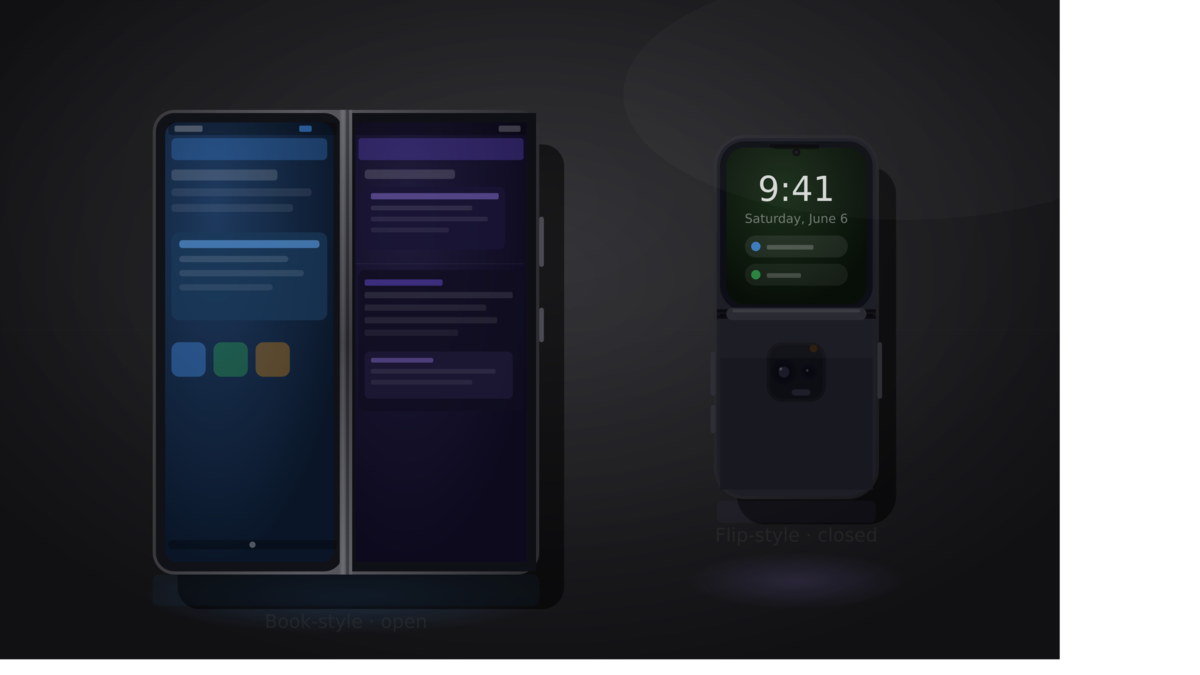
Table of Contents
What’s Happening in the Foldable Phone Market in 2026
The foldable smartphone market is experiencing its biggest growth year yet. According to IDC (International Data Corporation), foldable shipments are projected to grow 30% year-over-year in 2026 — a sharp contrast to the broader smartphone market, which is expected to shrink.
The biggest catalyst? Apple.
Apple is entering the foldable space for the first time, with a device expected to carry an average price point of around $2,400. Analysts at IDC predict Apple will capture over 22% of unit share and around 34% of foldable market value in its debut year alone. That’s an extraordinary opening for any new product category.
Samsung, meanwhile, is not standing still. The Galaxy Z TriFold — a three-panel device with a 10-inch main display — has already been announced, and the Galaxy Z Fold 7 remains widely regarded as the benchmark for book-style foldables.
New challengers are also arriving. Motorola entered the book-style foldable segment at MWC 2026 with its Razr Fold, directly competing with Samsung. HONOR, Huawei, Google, and OnePlus are all fielding competitive options.
In short: the foldable market in 2026 is more crowded, more competitive, and more mature than at any point in its history.
The Two Main Types of Foldable Phones
Before deciding whether a foldable is right for you, it helps to understand the two main designs available.
Flip-Style Foldables (Clamshell)
Devices like the Samsung Galaxy Z Flip 7 and Motorola Razr fold vertically, collapsing in half like a compact mirror. They’re pocket-friendly, stylish, and typically more affordable than book-style foldables. The trade-off is that the screen doesn’t get significantly larger when unfolded — it’s more about portability than productivity.
Flip phones represent 67% of all foldable smartphones currently owned, making them the more popular of the two form factors.
Book-Style Foldables
Devices like the Samsung Galaxy Z Fold 7 and Google Pixel Fold open horizontally, revealing a large tablet-like display — typically between 7 and 10 inches. These are productivity-focused devices aimed at users who want more screen space for multitasking, media, and work.
According to Counterpoint Research, book-type foldables are forecast to reach 65% of foldable shipment share by 2026 as brands invest more heavily in this category. Inward-fold designs (where the screen folds inward) account for about 58.8% of the market, primarily because they better protect the display from daily wear.
Key Improvements Foldables Have Made in 2026
The honest truth is that early foldable phones had real problems. Here’s what’s changed.
More Durable Screens and Hinges
Samsung has made significant improvements to hinge durability and reduced crease visibility on the Galaxy Z Fold 7. Ultra-thin glass (UTG) technology has matured, and brands like HONOR are using advanced silicon-carbon batteries that allow for slimmer designs without sacrificing capacity.
Better Battery Life
Battery life was one of the most common complaints in earlier generations. The HONOR Magic V6 packs a 6,660 mAh silicon-carbon battery — an industry first for foldables. Other manufacturers are following with high-capacity cells that fit in thinner chassis.
AI-Powered Multitasking
AI is now deeply integrated into foldable software. Samsung Galaxy AI features on the Z Fold 7 include Interpreter Mode and Sketch to Image across the larger canvas. Google Gemini is integrated into the Pixel Fold lineup, offering contextual assistance across panels. These aren’t gimmicks — they genuinely take advantage of the larger display to do things a regular phone can’t.
Slimmer and Lighter Builds
One of the most common complaints has always been bulk. That’s changing. Modern foldables are noticeably thinner and lighter than their predecessors, making them more viable as everyday carry devices.
Why It Matters for Everyday Users
Here’s the simple version: if you’ve been waiting for foldable phones to grow up, 2026 might be the year you stop waiting.
For users who multitask, watch a lot of video, travel frequently, or work from their phone, the larger display of a book-style foldable offers a genuinely different experience. Imagine editing a document on one panel while referencing notes on the other — or watching a video in full widescreen format without reaching for a tablet.
For users who prioritize portability and style, a flip-style foldable offers a compact, premium design that stands out without asking you to carry a bigger device.
Neither type is perfect. The crease is still visible under certain lighting. Foldable displays remain statistically more vulnerable to damage than hardened glass on standard phones. Battery life, while improving, can still trail conventional flagships in direct comparisons.
But the gap between foldables and regular phones is narrower than it’s ever been.
How the Industry and Users Are Reacting
Consumer interest is accelerating alongside market growth. A recent survey found that 14% of respondents said their next phone would be a foldable, while 36% said they were specifically waiting for the iPhone Fold before making a decision.
That last figure speaks volumes. Apple’s entry into the foldable market isn’t just one more device launching — it’s a signal to mainstream consumers that this form factor is legitimate.
As Francisco Jeronimo, VP of Client Devices at IDC, noted: Apple’s launch is likely to boost category awareness and drive consumer interest far beyond its own customer base. When Apple validates a category, other consumers take notice.
Software ecosystems are also maturing. Samsung’s One UI remains the most refined multitasking system in the foldable space, with reliable split-screen and floating window support. Google’s Android updates have added native optimizations for large-format foldable screens, and third-party app compatibility has improved significantly.
Potential Impact Through the Rest of 2026
Looking ahead, a few trends are worth watching.
Prices will likely drop on older models. With Apple entering the space and new Samsung and Motorola devices arriving, 2024 and 2025 foldables will see price reductions — making them more accessible to buyers who want to try the form factor without paying top dollar.
Apple’s foldable will reshape the conversation. Even before it ships, the announcement effect alone will drive traffic and comparisons across the entire category. Expect reviewers and users to benchmark every existing foldable against whatever Apple delivers.
Enterprise and productivity use cases are growing. Businesses are beginning to explore foldables as tools for field workers, executives, and mobile-first roles where a small tablet isn’t practical but more screen space is needed. This is an emerging market that could drive adoption in ways consumer marketing alone hasn’t.
Tri-fold devices will remain premium experiments. The Samsung Galaxy Z TriFold and Huawei Mate XT are impressive, but at $2,899+, they remain aspirational rather than practical for most buyers. Expect these to influence future designs rather than drive volume.
The global foldable smartphone market, valued at $26 billion in 2023, is projected to reach $188.4 billion by 2033. That’s not a trend — that’s a shift.
Conclusion
Foldable phones in 2026 are no longer a novelty. They’re real, capable devices with genuine advantages for the right kind of user.
The form factor still asks more of you than a conventional smartphone — more money, slightly more care, and a willingness to adapt to a different way of using a phone. But in return, it offers something no flat-screen phone can: a screen that fits your life when you need more of it and shrinks when you don’t.
With Apple entering the market, Samsung refining its most mature lineup, and prices gradually becoming more competitive, the question has shifted from “are foldables ready?” to “is a foldable right for you?”
For many users in 2026, the honest answer is getting closer to yes.