

Introduction
The global expansion of 5G networks is picking up speed, fundamentally changing the way people stay connected, share information, and access digital services. Across the world, telecom companies, governments, and major tech firms are investing billions to widen coverage and boost network performance.
At the same time, research into the next generation of wireless technology—often referred to as 6G—has already begun in early development labs and academic institutions. This forward-looking work is starting to shape conversations about what the future of connectivity could look like beyond 5G.
Even though 5G is still being actively rolled out in many regions, global organizations like the International Telecommunication Union (ITU) are already working on long-term frameworks and standards for future networks. Keeping track of where 5G currently stands—and how 6G is expected to evolve over time—has become increasingly important for consumers, businesses, and policymakers trying to plan for the next wave of digital transformation.
Table of Contents
The Current State of 5G Expansion
Global Deployment Progress
5G, the fifth generation of mobile network technology, is designed to deliver faster speeds, lower latency, and greater capacity compared to 4G. Since its initial commercial launch around 2019, adoption has steadily increased.
Major telecom providers and governments worldwide are expanding infrastructure, including:
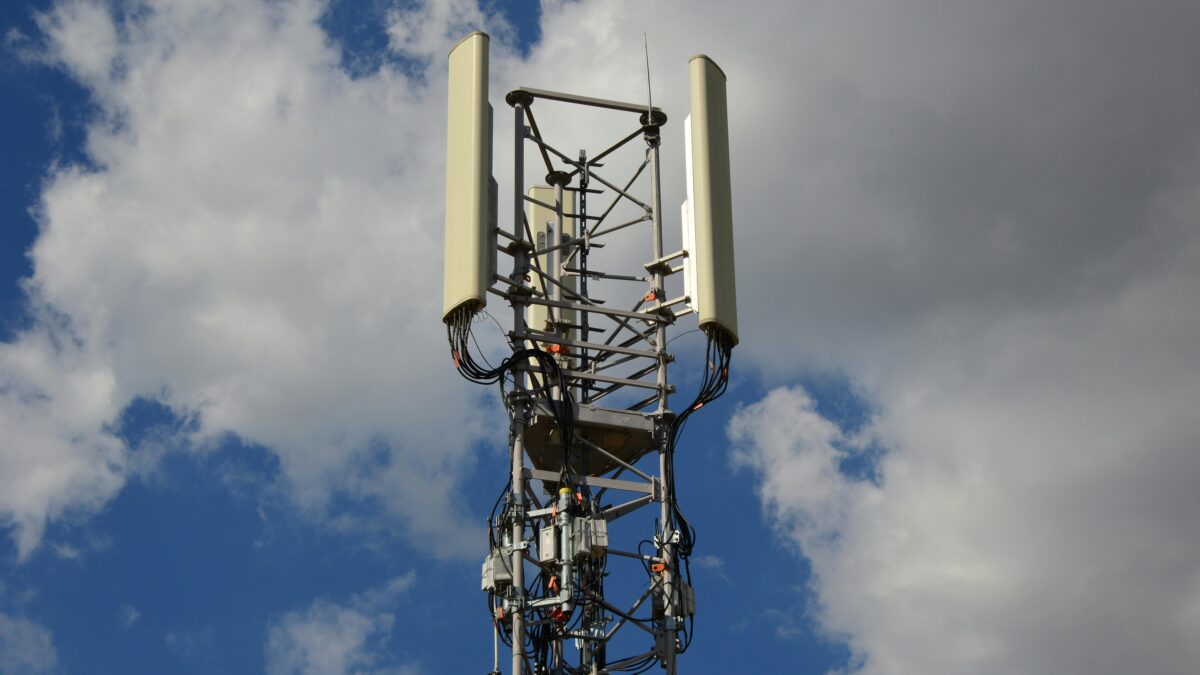
- New base stations and antennas
- Fiber-optic backbone networks
- Spectrum allocation for faster data transmission
Countries in Asia, Europe, and North America are leading deployment, while emerging markets are gradually catching up. However, coverage remains uneven, particularly in rural or less economically developed regions.
Key Benefits of 5G
5G technology enables several practical improvements:
- Faster speeds: Significantly higher data rates than 4G, supporting streaming and cloud applications
- Lower latency: Reduced delay improves real-time services such as gaming and video calls
- Higher capacity: Supports more connected devices simultaneously
These features are particularly important for industries adopting digital transformation, including healthcare, transportation, and manufacturing.
Real-World Applications of 5G
Consumer Use
For everyday users, 5G enhances mobile experiences:
- High-definition video streaming without buffering
- Improved performance for online gaming
- Faster downloads and uploads
However, the difference between 4G and 5G may not always be noticeable in all scenarios, especially in areas where 5G infrastructure is still developing.
Industrial and Enterprise Impact
5G plays a more transformative role in business environments:
- Smart cities: Improved traffic systems and energy management
- Healthcare: Remote monitoring and telemedicine
- Manufacturing: Automation and real-time data analysis
Companies like Ericsson and Huawei are actively developing infrastructure solutions that support these applications.
Challenges Slowing 5G Adoption
Despite progress, several factors limit the full potential of 5G:
Infrastructure Costs
Building 5G networks requires significant investment. Higher-frequency signals used in some 5G bands have shorter ranges, meaning more towers are needed.
Coverage Gaps
Urban areas benefit the most from 5G, while rural regions often lag behind due to lower economic incentives for deployment.
Device Compatibility
Not all smartphones and devices support 5G, which slows widespread adoption. Although newer devices increasingly include 5G capabilities, older hardware remains in use globally.
Regulatory and Spectrum Issues
Governments must manage spectrum allocation carefully. Coordination across countries is often required to avoid interference and ensure efficient use of frequencies.
What is 6G and why does it matter
Early Research and Development
Even as 5G expands, research into 6G is already underway. Organizations like the 3rd Generation Partnership Project and academic institutions are exploring the next generation of wireless communication.
6G is expected to build on 5G’s capabilities, potentially offering:
- Even higher data speeds
- Ultra-low latency
- Integration with advanced technologies like artificial intelligence
However, it is important to note that 6G is still in the research phase. No commercial deployment exists yet.
Expected Timeline
Based on current industry discussions, 6G is unlikely to be commercially available before the early 2030s. Standardization efforts typically take years, followed by infrastructure development and device manufacturing.
This timeline reflects the complexity of developing new communication standards and ensuring global compatibility.
The Reality Behind 6G Expectations
Separating Hype from Fact
While 6G is often described in ambitious terms, many claims remain theoretical. Researchers are exploring technologies such as:
- Terahertz frequency bands
- Advanced AI-driven networks
- Holographic communication
At this stage, these concepts are experimental and not yet proven for large-scale use.
Technical and Practical Challenges
6G development faces several obstacles:
- Signal limitations: Higher frequencies may struggle with range and penetration
- Energy efficiency: Advanced networks could require more power unless optimized
- Infrastructure demands: Even greater density of network equipment may be needed
Because of these challenges, experts emphasize that 6G research is exploratory rather than immediately practical.
Key Facts and Updates
- 5G continues to expand globally, but coverage varies significantly by region
- Industries are increasingly adopting 5G for automation and data-driven operations
- 6G research is ongoing, led by international organizations and technology companies
- Commercial 6G deployment is not expected before the 2030s
- Many 6G capabilities remain theoretical and require further validation
Conclusion
The expansion of 5G represents a significant step forward in global connectivity, enabling faster communication, improved services, and new technological possibilities. While challenges remain—particularly in infrastructure, cost, and coverage—progress is steady and ongoing.
At the same time, 6G research highlights the long-term vision for the future of wireless networks. However, it is important to approach 6G with realistic expectations. The technology is still in its early stages, and widespread adoption is likely many years away.
For now, the focus remains on maximizing the potential of 5G and ensuring that its benefits are accessible across different regions and industries. As research continues, 6G may eventually redefine connectivity once again—but its impact will depend on overcoming significant technical and practical hurdles.
FAQs
1. What is the main advantage of 5G over 4G?
5G offers faster speeds, lower latency, and the ability to support more connected devices compared to 4G networks.
2. Is 5G available everywhere?
No, 5G coverage is still expanding and is more widely available in urban areas than in rural regions.
3. When will 6G be available?
Current projections suggest that 6G could become commercially available in the early 2030s.
4. Is 6G already being used?
No, 6G is still in the research and development phase and has not been deployed commercially.
5. Will 6G replace 5G quickly?
No, like previous generations, 5G and 6G are expected to coexist for many years after 6G is introduced.
For more read our article on: smartips.blog